In Blantyre, a man who lived skint on dirty streets has become a mayor the city was probably waiting for.
Elected last November, Isaac Jomo Osman is widely photographed shovelling debris from drains and cleaning the streets with Blantyre City Council ground workers.
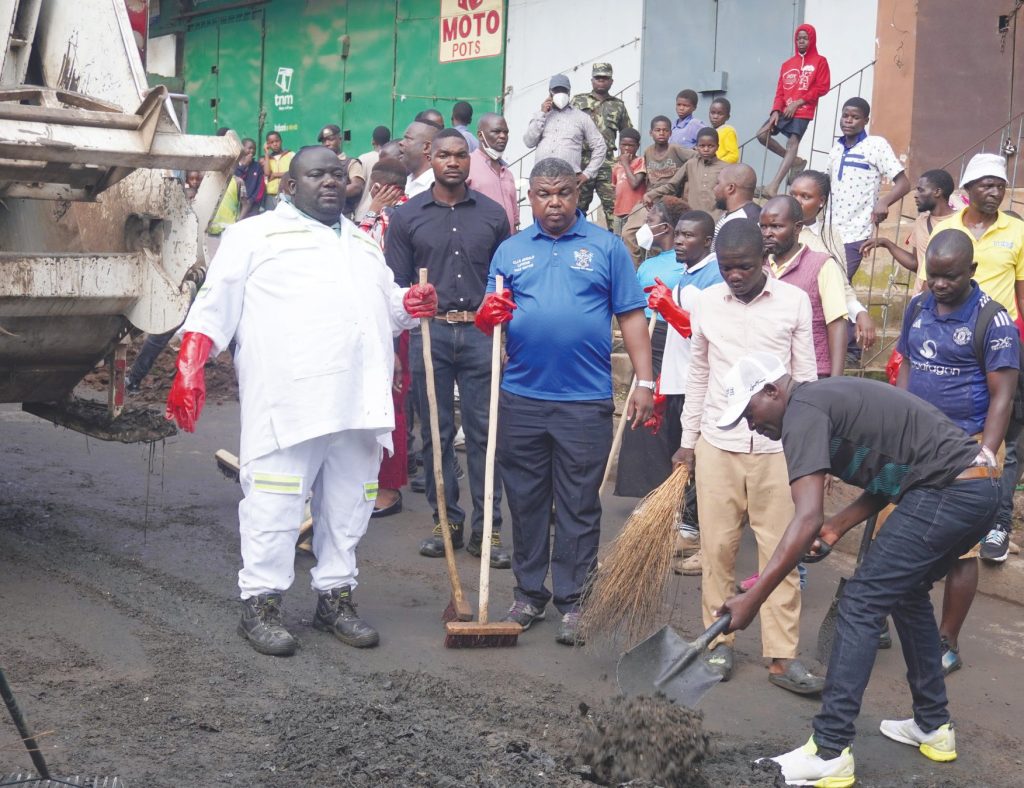
“I grew up on these streets, so I have witnessed worsening sanitation breakdown for decades,” he says, boots on the ground. “Keeping the city clean isn’t just the job of Jomo or the council, but everyone has to play a part.”
The mayor wants an end to widespread littering.
“Stop dumping of waste without minding where it lands,” he says. “Together, we must clean up,” he says.
The clean-up is mostly confined to Limbe and surrounding towns, with little trickling to settlements where people spend more hours.
The boots-on-the-ground approach has catapulted Jomo to the helm of Malawi Local Government Association (Malga).
Last December, councillors and heads of councils elected the one-time street-connected child Malga president. He teasingly terms himself the president of all councillors and mayors nationwide.
On Saturday, Jomo only came a notch shy of becoming the regional mayor, having been elected vice-president of United Cities and Local Governments of Southern Africa.
However, a public health storm at home threatens his growing influence amplified by the waste management crusade.
Blantyre is the epicentre of Malawi’s cholera and polio outbreaks fuelled by poor sanitation, especially contaminated human excreta.
The commercial hub has recorded two deaths and nearly half of the country’s 102 confirmed cases in the raging wave confirmed on December 11.
The city suffered the worst sting of Malawi’s deadliest outbreak which killed about 1 770 of nearly 55 000 confirmed patients from 2002 to 2003.
The new wave coincides with the discovery of type-2 poliovirus in a seven-year-old child from Makhetha clustered settlement.
Health authorities also discovered the vaccine-preventable virus in samples of stools collected from Soche and Manase sewage systems.
The Expanded Programme on Immunisation (EPI) has triggered emergency vaccination campaigns in response to the sanitation-related diseases.
EPI national surveillance officer Joyce Beyamu warns that neglected sanitation woes undermine the benefits of vaccines, including routine immunisation for children under five and emergency campaigns.
She says the commercial hub runs a high risk of sustained cholera and poliovirus transmission unless it fixes the sanitation woes.
“The repeated cholera outbreaks in Blantyre provides evidence of a breakdown in sanitation in access to water, sanitation and hygiene. By improving sanitation and hygiene to end cholera, we will also make polio history. This is killing two birds with one stone,” she states.
Both diseases spread through ingestion of contaminated faecal matter via soiled hands, food and water, science shows.
Health workers plan to vaccinate children under 10 to stop the spread of the polio strain that was declared history in 2015.
The campaign, planned to kick off this month, will run concurrently with routine immunisation just weeks after the oral cholera vaccination campaign in hotspots.
Minister of Health and Sanitation spokesperson Adrian Chikumbe invoked the time-honoured mantra: Prevention is better than cure.
He argues: “The country could benefit hugely if we join hands and invest more to close the costly sanitation and hygiene gaps.
“Currently, studies show that 52 percent of outpatients in the country’s health facilities seek treatment for infections that could be prevented through improved access to safe water, sanitation and hygiene. Imagine how much the country could save through good sanitation.”
The study by the ministry together with the World Health Organisation does not attach a cost to the sanitation-related disease burden on the overwhelmed healthcare system.
However, a 2012 World Bank study hinted that poor sanitation costs Malawi about $57 million annually and open defaecation alone—the super-spreader of both polio and cholera—drains about $14 million, “yet ending the risk could cost less”.
“The Ministry of Health and Sanitation is conducting an investment case study which shows us how much we are going to save per case if we do the right things to avert cholera outbreaks,” says deputy director of community health Mavuto Thomas.
Meanwhile, the country’s community-led total sanitation policy has dotted rural communities with bittersweet billboards proclaiming: “Ife tasiya kunyera ku tchire (We have stopped defaecating in the open).
However, gaps persist in urban settings once mistaken to be exempted from cholera burden.
Among health workers, concerns are growing that towns and cities could be left behind in the national race against diseases fuelled by contaminated faecal matter.
Urban populations are sitting on ticking bombs not just due to the rampant damming of untreated human waste in septic tanks that soak into the soil, mixing with groundwater that people drink through nearby wells.
Some people dump soiled diapers in open spaces and empty pit latrines into streams, laments Blantyre District Health Office spokesperson Chrissy Banda.
“Cholera outbreaks have become frequent in urban areas,” she says “During a rapid survey conducted in cholera hotspots from February 5 to 9, we saw beautiful houses without toilets, diapers discarded all over the place and pit latrines fitted with pipes emptying human waste into streams where people who cannot afford potable water from communal kiosks draw water.”
Jomo aptly observes that the battle against the public health hazard will not be won by him alone or a single superman, but collective action. After all, Blantyre is not Jomo town, but a city of over a million people.
He says: “We need to join hands to make our city clean. Repeated cholera outbreaks are a wake-up call.”